
he 2-1 Austrian win in Vienna last October wasn't just another Nations League fixture. It was the 138th meeting between two neighbors whose football histories are knotted together like a pair of old bootlaces. I was in the away section that night, and the Hungarian fans around me kept shouting "Ezer év" — a thousand years — a reference to the shared border that has shifted more times than either side cares to admit. Austria vs Hungary is never just about ninety minutes.Look at the raw numbers and you'd think the gap is wider than the Leitha hills. Austria sits 25th in the FIFA rankings;Hungary 27th. Austria's squad value hovers near €300 million;
Hungary's around €150 million. But rankings lie. In the last six head-to-heads, Austria has won two, Hungary two。and two ended level. The 2016 European Championship group stage match, a 2-0 Austrian win in Bordeaux, still stings for Hungarian fans who had waited 44 years for a major tournament. Ask any Hungarian about that game and you'll get a sigh, then a lecture on missed chances.What separates them isn't talent — it's football culture. Austria's Bundesliga clubs invest heavily in youth academies;Red Bull Salzburg alone has produced more than a dozen internationals in the past decade. Hungary's strength comes from a different place: the Puskás Akadémia, a state-backed academy in Felcsút, has quietly become the heartbeat of the national team. I visited their training ground in 2022. It's immaculate, almost eerily quiet, with a life-size statue of a young Ferenc Puskás near the entrance. The philosophy there is almost obsessive about technical repetition. Austrian coaches I've spoken to admire it but admit they couldn't replicate the model — too centralised。too dependent on one patron's vision.On the pitch, Austria vs Hungary tends to be a tactical chess match with occasional bursts of chaos. Austria presses high。often in a 4-2-3-1 that morphs into a 4-4-2 mid-block;
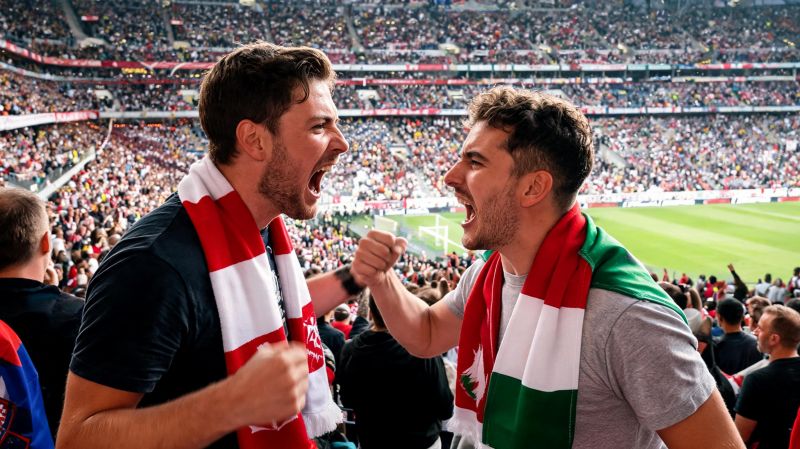
Hungary prefers to sit deeper and counter through the wings, relying on Dominik Szoboszlai's long diagonals. In their most recent meeting, Austria's midfield trio completed 89% of their passes but managed only three shots on target. Hungary, meanwhile, had 34% possession and four shots on target. That's the pattern. If you're betting on this fixture, ignore possession stats — look at set pieces. Hungary has scored in each of their last five goals against Austria from dead-ball situations.Off the field, the rivalry carries a strange warmth. Hungarian fans travel to Vienna in droves, filling the Ernst-Happel-Stadion's away corner with songs that mix defiance and nostalgia. Austrian fans, for their part, seem almost reluctant to admit how much this match matters. "It's not Germany," one Austrian journalist told me outside the stadium. "But losing to Hungary feels worse. They never let us forget it." That's the truth of Austria vs Hungary — a rivalry built on geography。history, and the kind of mutual respect that only comes from centuries of shared, complicated history. The next chapter comes in Budapest this autumn. Expect no handshakes exchanged too early.